

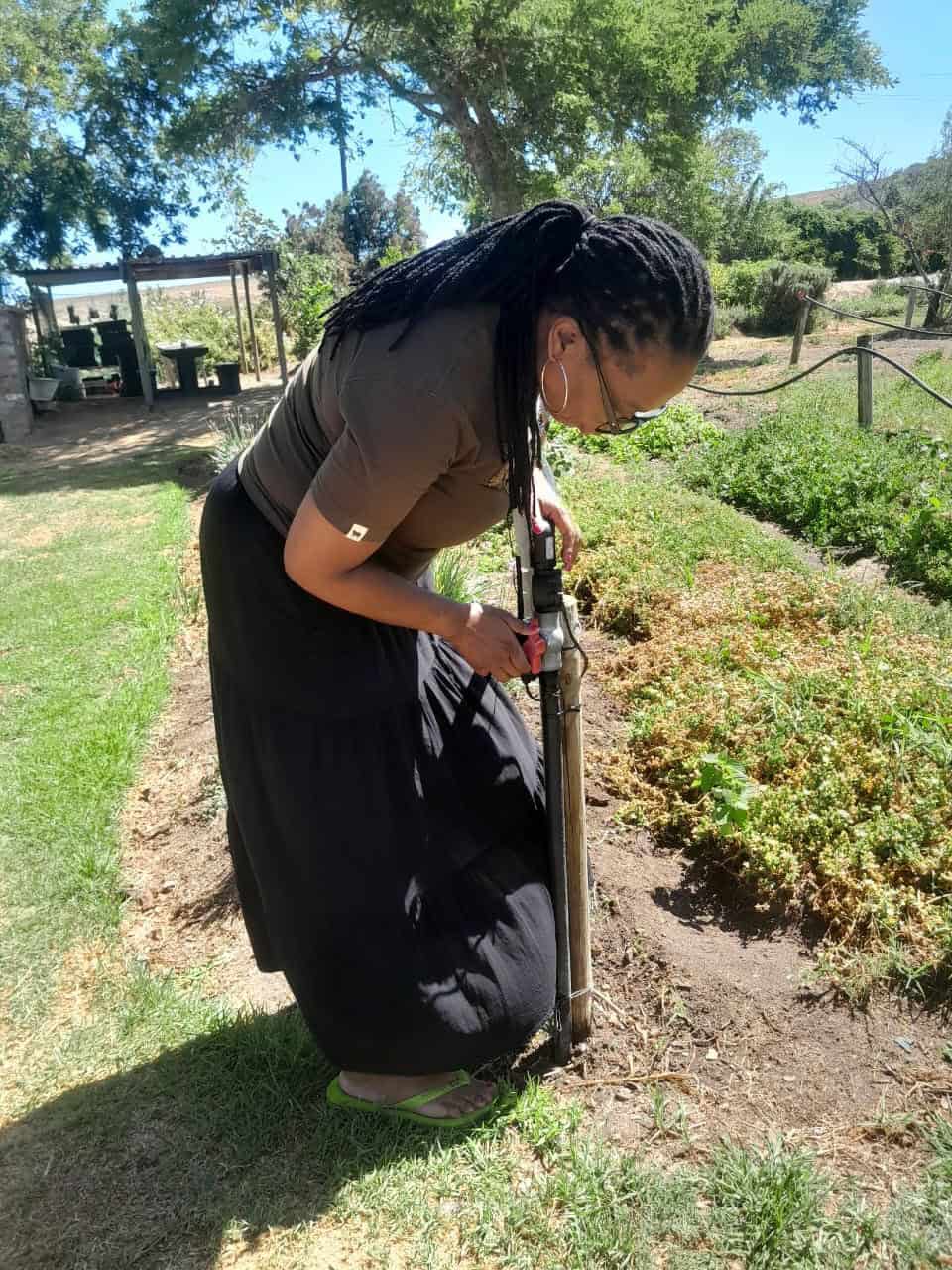
There is a rise of Black women stepping into farming; running poultry houses, cultivating vegetables and leading cooperatives that feed families as well as supply markets. This rise is reshaping the agricultural landscape. Organisations such as Riverbend Farming Enterprises, a partnership that empowers women smallholders through training and access to regenerative farming practices, as well as Soil for Life, which works with communities to build healthy soil and sustainable food gardens; are playing a vital role in this transformation. These efforts should not happen in isolation but be part of a broader movement to ensure women farmers gain access to knowledge, technology, and financial support that allows them to compete, thrive, and transform their communities.
The Promise of Smart Agritech
Smart Agritech has the power to save time & labour costs, improve yields, and open access to new markets. A soil sensor that helps schedule irrigation, for example, can cut water use and fertiliser waste by up to 40%, while maintaining or even boosting crop quality. Digital record-keeping tools also strengthen a farmer’s case when applying for finance or negotiating with buyers. Women already carry heavy responsibilities both on and off the farm, so technology in agriculture should not be seen as a luxury, but as the standard way farming is done. In today’s world, very few industries operate without some level of Internet of Things (IoT), artificial intelligence, or digital innovation; agriculture should be no different.
The Barriers
So why aren’t more Black women using these tools? The reasons are structural; stemming from decades of exclusion. Key barriers include:
- Upfront investment in devices, plus ongoing data or maintenance fees.
- Limited internet and electricity infrastructure in rural areas.
- Farmers need practical, local demonstrations to build confidence.
- Many women juggle household, childcare, and farming, leaving little space to learn new systems.
These barriers mean that even when technology exists, adoption remains slow.
Education and Empowerment
There are opportunities for field-based workshops, demonstration farms, and women-led peer mentoring networks to assist with closing the confidence gap. If black women understood that a single gateway as an example, can reach sensors as far as 5 kms away, collecting data on soil moisture, temperature, and other conditions in real time. This creates an opportunity for shared costs and the development of ‘tech libraries’ at cooperatives, where members can pool resources, access data collectively, and rotate devices across their farms or plots to maximise benefit. What is needed is education to understand what smart agritech tools can potentially do for their crops.
These platforms can help with empowering women with data literacy, learning how to read dashboards, interpret alerts, or use Phone-based farming apps. They have a potential to make a real difference.
The Way Forward
If South Africa wants a thriving, inclusive agricultural sector, smart agritech must not widen the gap that we have worked hard to build over the decades. It must instead become a tool for empowerment. That means redesigning funding processes (which I will unpack in my next article), scaling cooperative models, investing in rural connectivity, and prioritising Black women in training and support programmes. Black women are already proving their resilience and leadership in agriculture. With the right support, they can also be at the forefront of South Africa’s smart agritech revolution, boosting food security, creating jobs, and building generational wealth.

